
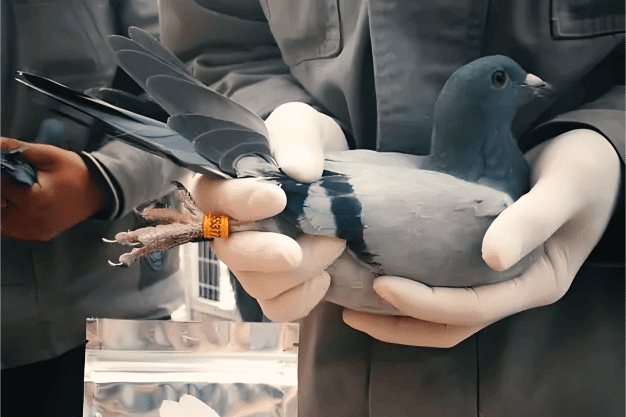
DRD4 Gene in Racing Pigeons: Why It Matters and How to Test It
DRD4 Gene Test: Homing Motivation, Alertness & Core Three Indicators | SENO
Disclaimer
The Racing Pigeon Performance DNA Test provided by our laboratory is intended solely for research, breeding reference, and academic purposes. The test results should not be regarded as a decisive predictor of racing performance, nor should they be used as a factor for qualifying, ranking, or evaluating pigeons in any official racing events. Actual racing outcomes are influenced by multiple environmental and management factors; therefore, the genetic findings serve only as limited reference information. Our laboratory makes no guarantees or commitments regarding the application of these results to real-world racing performance.
1. What Is the DRD4 Gene and Why Is It Crucial for Racing Pigeons?
The DRD4 gene encodes the dopamine D4 receptor, a protein that transmits dopamine signals in the brain. Dopamine influences a pigeon’s attention, exploratory behavior, stress response, and learning capacity.
The DRD4 gene is recognized by our laboratory and clients as one of the Core Three Indicators (DRD4, CRY1, LDHA). It does not affect physique or stamina directly, but it determines homing motivation, alertness, exploration drive, and stress tolerance. These mental and behavioral factors translate directly into homing speed and efficiency.
DRD4 variations affect the following key behaviors in racing pigeons:
Homing and Orientation: Linked to better spatial memory and determined homing strategies.
Exploration and Risk-Taking: Beneficial for quick decision-making during variable weather or complex routes.
Stress Tolerance: Critical for maintaining focus during high-pressure competition flights.
Learning Capacity: Faster adaptation to landmarks and flight paths.
2. DRD4 Gene and Breeding Value
Modern pigeon breeding utilizes genetic markers like DRD4 as an essential decision tool.
[SENOR Laboratory Exclusive Insight: The Rarity of DRD4]
DRD4 variability follows Mendelian inheritance. Based on our years of testing experience, most racing pigeons possess average genotypes for the DRD4 indicator. Obtaining a heterozygous favorable genotype (e.g., CTCT or 7R/4R variant) is already a tremendous genetic asset. The homozygous optimal genotype (e.g., 7R/7R variant) is extremely rare, comparable to the scarcity of LDHA AA.
This means that breeders can significantly increase the probability of their offspring possessing a strong homing instinct by strategically selecting stock birds with favorable heterozygous DRD4 genotypes.
Case Validation:
Proskura et al. (2015): Reported that specific DRD4 polymorphisms were significantly associated with racing performance in pigeons.
Kolvenbag et al. (2022): A prospective study found that specific DRD4 alleles correlated with race coefficient scores, providing real-world evidence that DRD4 influences race performance.
3. How We Test the DRD4 Gene
Dual-Loci High-Precision PCR Testing:
To ensure the highest accuracy in determining the DRD4 genotype, we use the qPCR method, which requires the simultaneous testing and validation of two key loci. This complex detection procedure is fundamental to ensuring the reliability of our results.
qPCR Testing Process Overview:
Sample Collection: Feather roots, buccal swabs, or blood samples are collected.
DNA Extraction: High-quality DNA is extracted using commercial kits.
Primers & Probes: Designed with fluorescent probes targeting the DRD4 polymorphic region.
Real-Time PCR (qPCR): Carried out on a thermal cycler; results are grouped into homozygous or heterozygous clusters based on the fluorescent signal.
4. Practical DRD4 Breeding Guidelines
Core Pairing Principle: Stock birds with excellent DRD4 (e.g., CTCT or favorable heterozygous types) should be paired with birds excellent in CRY1 (Navigation) to ensure offspring inherit both strong homing motivation and correct flight direction.
Multi-Gene Integration: DRD4 must be assessed as part of a multi-gene panel (with LDHA, MSTN, CRY1, etc.) for a complete picture.
Data Tracking: Maintain a long-term record of your race results correlated with DRD4 genotypes to build a genetic performance database unique to your loft.
Transparency: When selling pigeons, transparently report DRD4 results as a supporting indicator of behavioral predisposition, not a performance guarantee.
5. Summary
The DRD4 gene is closely linked to a pigeon’s homing determination and behavioral patterns. We use dual-loci high-precision PCR testing for reliable results. DRD4 is a Core Three Indicator alongside CRY1 and LDHA. Breeders should utilize DRD4 results as a strategic tool to enhance the overall homing capability of their flock.
References
1. DRD4 and Racing Performance
Proskura, W. S., Kustosz, J., Dybus, A., & Lanckriet, R. (2015). Polymorphism in dopamine receptor D4 gene is associated with pigeon racing performance. Animal Genetics, 46(5), 586–587.
2. Prospective Study on Genotype Profiles
Kolvenbag, G., et al. (2022). Prospective study relating genotype profiles with race performance in racing pigeons. [Insert specific journal reference here].
3. General DRD4/Behavior Association
Silveira, P. P., et al. (2013). Association between the seven-repeat allele of DRD4 and behavior. [Insert specific journal reference here].
4. External Commercial Testing Reference
Animal Genetics. (n.d.). Performance Testing For Pigeons (DRD4 a,b). Retrieved from AnimalGenetics.com





 English
  French
  German
  Italian
  Chinese
  Spanish
  Korean
  Japanese
  Portuguese
  Russian