

The CRY1 Gene in Racing Pigeons: How It Shapes Navigation and Performance
CRY1 Gene Test: Navigation, Homing Consistency & Rare Genotype Insight | SENO
Disclaimer
The Racing Pigeon Performance DNA Test provided by our laboratory is intended solely for research, breeding reference, and academic purposes. The test results should not be regarded as a decisive predictor of racing performance, nor should they be used as a factor for qualifying, ranking, or evaluating pigeons in any official racing events. Actual racing outcomes are influenced by multiple environmental and management factors; therefore, the genetic findings serve only as limited reference information. Our laboratory makes no guarantees or commitments regarding the application of these results to real-world racing performance.
What Is the CRY1 Gene in Racing Pigeons?
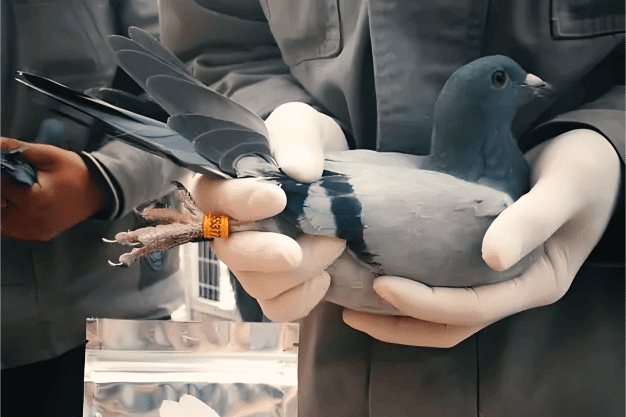
The CRY1 (Cryptochrome 1) gene plays a core role in the pigeon’s internal navigation system. It is part of a family of light-sensitive proteins believed to enable magnetoreception—the ability to sense the Earth’s magnetic field and navigate precisely over long distances.
Because the CRY1 gene directly reflects a pigeon’s navigation and orientation ability, it has become one of the most critical markers valued by clients and top lofts. A superior CRY1 genotype can significantly enhance the pigeon’s homing precision and flight consistency in complex environments, directly impacting the bird’s overall success level.
Studies have shown that variations in the CRY1 gene, particularly a specific mutation in intron 7, are significantly associated with improved race performance.
Why the CRY1 Gene in Racing Pigeons Matters
1. Genotypes and Their Meaning
The quality of the CRY1 genotype affects orientation, magnetoreception, and environmental adaptability, rather than just raw flight speed.
| Genotype | Description | Breeding Recommendation |
| AG/TT | Superior Heterozygous Genotype; linked to better race orientation and consistency. | Strongly recommended as a stock bird to enhance navigational stability in offspring. |
| AG/AG | Common (Wild-Type) Genotype; Standard reference. | Standard reference type; recommended for pairing with other birds carrying favorable genes. |
| TT/TT | Extremely Rare Homozygous Genotype (Optimal). | Maximum breeding value; these birds are genetically rare and highly coveted. |
[SENOR Laboratory Exclusive Insight: The Rarity of the CRY1 Genotype]
Based on our extensive testing experience with elite racing pigeons worldwide, the favorable CRY1 genotype is very uncommon; most pigeons are only average in this regard.
The heterozygous favorable genotype (AG/TT) already represents a significant genetic advantage.
The homozygous favorable genotype (TT/TT or corresponding marker) appears in the population at a frequency of only about 1% to 2%, or even lower.
Therefore, identifying and utilizing even an AG/TT stock bird is crucial for elevating a loft’s genetic standard.
2. Scientific Studies Support
Research published on PMC and PubMed highlights the link between magnetoreception genes (CRY1, CRY2) and navigational accuracy in homing pigeons. Professional testing laboratories now include CRY1 as a core marker alongside DRD4 and LDHA genes.
How We Test the CRY1 Gene in Racing Pigeons
1. Sample Types and Detection Method
We accept feather roots or blood samples. DNA is extracted and analyzed using high-precision methods like fluorescent probe qPCR.
The Complexity of CRY1 Multi-Loci Detection:
Unlike other genes that may require only single-point detection, our CRY1 analysis uses the qPCR method to perform simultaneous testing and validation on three key loci (sites). This complex procedure ensures our final determination of the genotype is of the highest professional accuracy.
2. Applied Value of CRY1 Testing
Multi-Gene Assessment: CRY1 results should be combined with other genes (DRD4, LDHA, MSTN) for a comprehensive evaluation of breeding potential.
Breeding Strategy: Use AG/TT pigeons as foundation breeders to enhance the navigational stability of future generations.
Trust and Credibility: Presenting CRY1 genetic certificates when selling or promoting pigeons enhances credibility and buyer confidence.
Why Now Is the Time to Test the CRY1 Gene in Racing Pigeons
Proven research links CRY1 with better orientation and flight consistency. Market demand for scientifically bred racing pigeons is growing rapidly.
Partnership Advantage: Become an industry leader in CRY1 genetic testing. Utilize our lab’s exclusive rarity data and multi-loci detection technology to offer unparalleled scientific value to your clients. This will not only command a premium for your services but also attract high-end clients in a competitive market.
References
1. CRY1 Gene Polymorphism and Racing Performance
Dybus, A., Kulig, H., Yu, Y.-H., Lanckriet, R., Proskura, W., & Cheng, Y.-H. (2021). CRY1 gene polymorphism and racing performance of homing pigeons. Animals, 11(9), 2568.
2. Link between Magnetoreception Genes and Navigation
Research published in PMC and PubMed highlights the link between magnetoreception genes (CRY1, CRY2) and navigational accuracy in homing pigeons. (Please insert the specific, full citation for the primary study you are referencing here, as the original text only named the databases.)
3. Association of Other Core Markers
Proskura, W. S., Kustosz, J., Dybus, A., & Lanckriet, R. (2015). Polymorphism in dopamine receptor D4 gene is associated with pigeon racing performance. Animal Genetics, 46(5), 586–587.
4. Additional Relevant Gene Association
Dybus, A., Proskura, W., Pawlina, E., & Nowak, B. (2018). Associations between polymorphisms in the myostatin MSTN, alpha A-globin and LDHB genes and racing performance in homing pigeons. Veterinarni Medicina, 63(8), 390–394.




 English
  French
  German
  Italian
  Chinese
  Spanish
  Korean
  Japanese
  Portuguese
  Russian