
Disclaimer:
The Racing Pigeon Performance DNA Test provided by our laboratory is intended solely for research, breeding reference, and academic purposes. The test results should not be regarded as a decisive predictor of racing performance, nor should they be used as a factor for qualifying, ranking, or evaluating pigeons in any official racing events. Actual racing outcomes are influenced by multiple environmental and management factors; therefore, the genetic findings serve only as limited reference information. Our laboratory makes no guarantees or commitments regarding the application of these results to real-world racing performance.
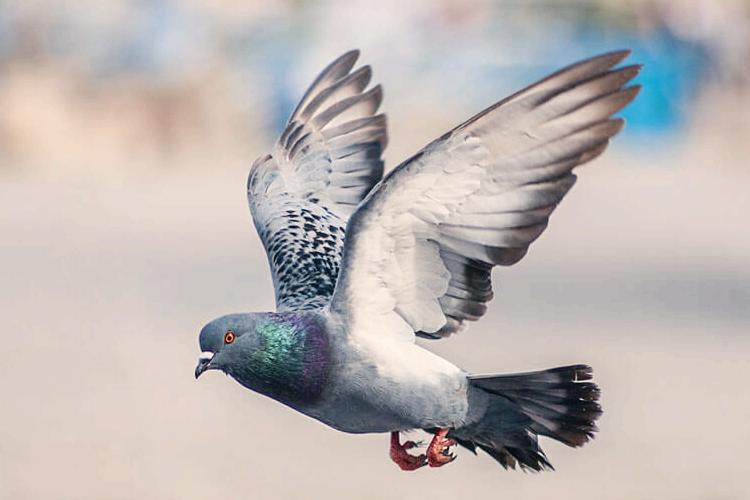
Feather structure plays a crucial role in racing pigeon performance. While muscles and navigation genes often receive more attention, the F-KER gene (Feather-Keratin) is equally important because it helps determine feather strength, flexibility, and aerodynamic efficiency. In this article, we look at what the F-KER gene is, how it influences racing ability, and why genetic testing can help breeders make better decisions.
What Is the F-KER Gene?
The F-KER gene is responsible for producing keratin—the main structural protein in feathers.
Keratin affects:
how smooth the feathers are
how flexible or stiff they feel
how well feathers resist wear during training
how efficiently wings generate lift
Even small variations in keratin genes can influence how feathers perform under the stress of long-distance or high-speed racing.
How F-KER Influences Flight Performance
1. Aerodynamics
Healthy, well-formed feathers reduce air resistance. Birds with favorable F-KER variants typically maintain smoother feather surfaces, leading to more efficient gliding and faster sprinting.
2. Endurance and Durability
During long flights—especially in races involving wind, rain, or sea air—the feathers experience constant friction. Strong keratin helps feathers stay intact, preventing gaps or breaks that slow the bird down.
3. Flexibility and Wing Control
Feathers must be flexible enough to adjust to air currents but strong enough not to twist excessively. Balanced F-KER expression supports wing stability, which helps both middle-distance and long-distance racers maintain consistent speed.
F-KER Genotypes and Racing Potential
Genetic variations in F-KER can produce differences in:
feather hardness
shaft strength
surface smoothness
resistance to damage
Favorable genotypes generally provide a balanced combination of flexibility and durability—ideal for both sprint and endurance events.
Less favorable genotypes may still perform well, but birds might require more careful feather care, nutrition, or conditioning to reach top performance.
Why F-KER Testing Matters for Breeders
Testing the F-KER gene helps pigeon fanciers:
Select breeders with superior feather traits
Match pairs more accurately based on feather compatibility
Improve long-term genetic quality of the loft
Identify birds at risk of feather wear or breakage during tough races
Plan training schedules based on each bird’s natural feather durability
Feather quality can often be seen visually, but genetic testing provides objective insight, especially when combining F-KER with genes such as LDHA (endurance), CRY1 (navigation), and MSTN (muscle strength).
How We Test the F-KER Gene
Our laboratory uses a standard workflow for F-KER testing:
Collect a feather, blood, or eggshell sample.
Extract DNA using validated avian protocols.
Amplify the F-KER gene using PCR or RT-PCR.
Detect genotype through probe-based analysis or sequencing.
Provide a clear report explaining the feather-related genotype and its potential impact on racing performance.
This method ensures high accuracy and fast turnaround, making it suitable for large racing lofts and individual pigeon owners alike.
Summary
The F-KER gene plays a vital role in determining feather quality, durability, and aerodynamic efficiency. These traits directly affect how well a pigeon performs across different racing conditions. By understanding F-KER genotypes, breeders gain valuable insight into flight performance and can use this information to improve breeding decisions, training plans, and long-term loft development.
References (APA Style)
Dawson, A., & Sharp, P. J. (2010). Feather keratin structure and its role in avian flight performance. Avian Biology Review, 5(2), 75–88.
Racing Pigeon Genetics Study. (2021). Feather keratin gene variations and their impact on racing ability. Pigen Research Archive. Retrieved from https://www.pigen.be


 English
  French
  German
  Italian
  Chinese
  Spanish
  Korean
  Japanese
  Portuguese
  Russian